The Asynchronous Career: Why the Future of Work Has Fewer Meetings
The future of work may not be about more meetings, louder communication or constant availability. As remote teams, AI tools and global collaboration reshape careers, the real advantage may belong to people who can work clearly, independently and asynchronously.


The sudden corporate obsession with asynchronous work and the war on meetings is not a fleeting post-pandemic trend or a simple productivity hack. It is the digital echo of the manufacturing revolution that Henry Ford ignited over a century ago. We are not inventing a new way to work; we are merely applying a proven, industrial-age principle to the abstract world of knowledge and information, and the consequences will be just as profound.
An asynchronous career is built on the deliberate decoupling of work from time. It prizes focused, individual output over performative presence in a conference room or a video call. Progress is measured by what gets completed, not by how many hours are spent in discussion. The goal is to transform the office from a place of constant interruption-driven collaboration into a system where deep work can happen in parallel, with communication that is thoughtful and documented, not immediate and ephemeral. This isn't about working alone; it's about working together, differently.
The Ghost in the Machine
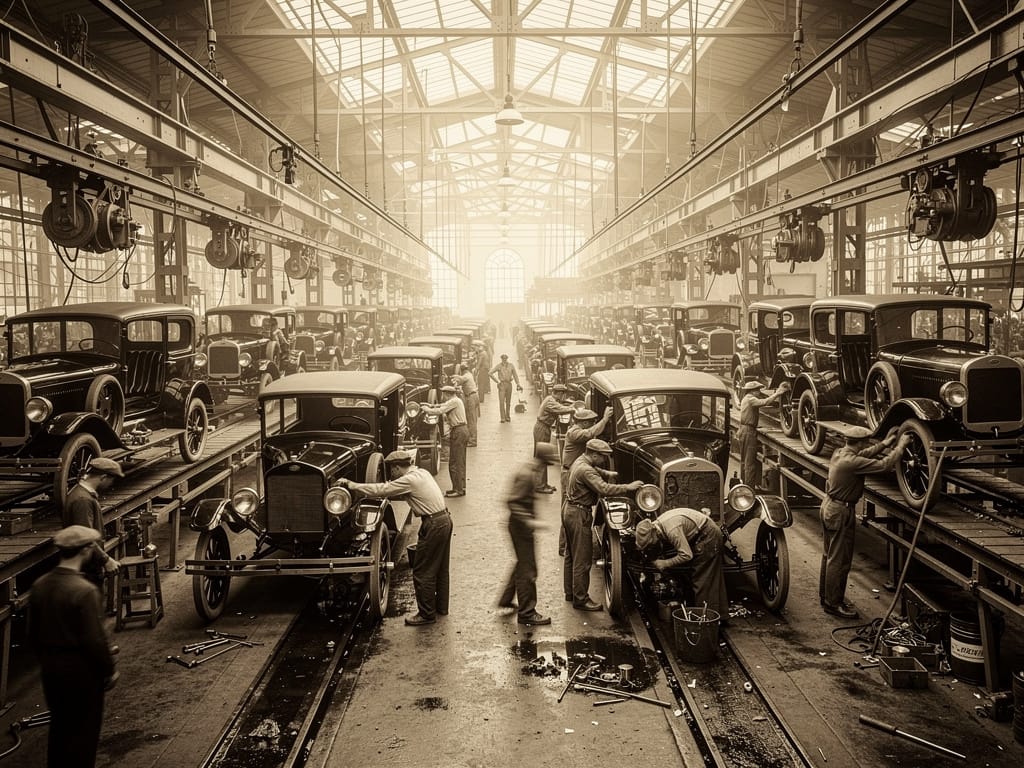
To understand where we are going, you have to look at Highland Park, Michigan, in 1913. Before the moving assembly line, building a car was a chaotic affair. Teams of skilled craftsmen swarmed a stationary chassis, each performing multiple tasks. They had to constantly coordinate, talk, and get in each other's way. A single Model T took over 12 hours to assemble. It was the physical equivalent of a day-long, unstructured meeting where everyone talks at once.
Ford’s insight was not just about speed; it was about deconstruction. He broke the assembly of a car into 84 distinct, simple steps. Then, he brought the work to the worker via a moving line. A man no longer needed to talk to the person next to him about what to do. His task was clear, independent, and repeatable. The system, not a manager shouting orders, became the coordinator. The need for constant, real-time collaboration vanished. The assembly time for a Model T dropped to 93 minutes.
The Digital Assembly Line
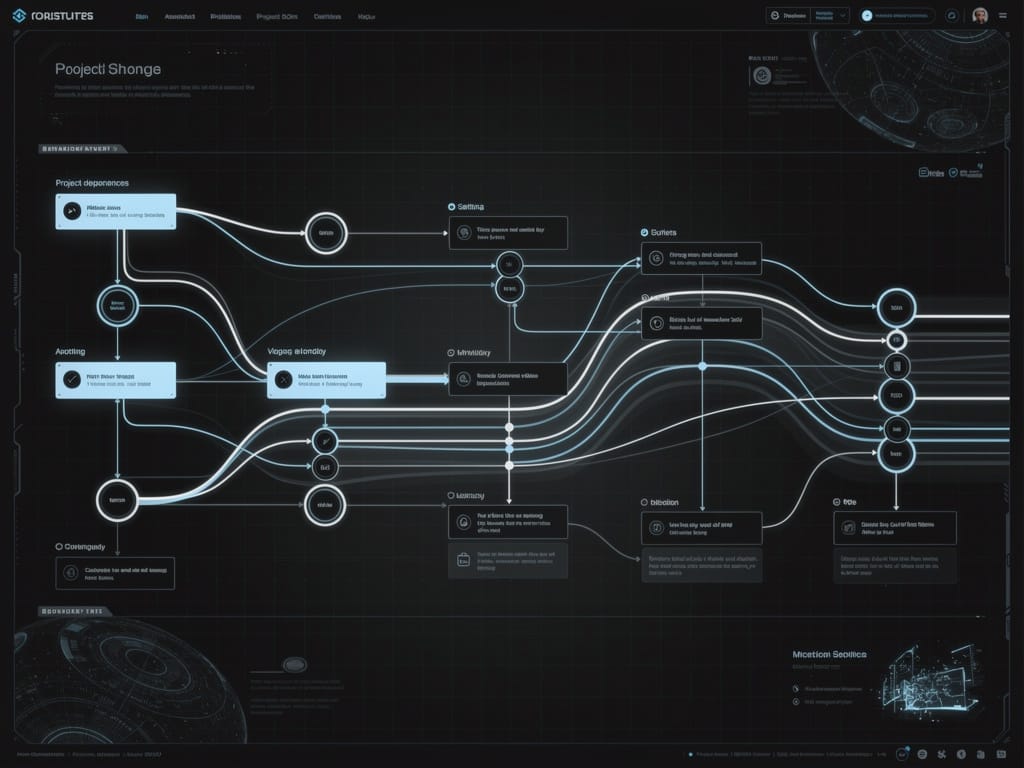
Today's knowledge work is that pre-1913 factory floor. We swarm around digital projects-a marketing campaign, a software update, a quarterly report-with a chaotic series of meetings, emails, and instant messages. The back-to-back Zoom call is the modern bottleneck, the stationary chassis holding up all progress.
The asynchronous model is Ford's logic applied to pixels. Project management tools like Asana, Jira, and Notion are the new conveyor belts. They break down a complex project into small, discrete tasks. A designer can complete a mockup, mark it as 'done,' and the system automatically notifies the copywriter that it's their turn. No status meeting is required. The 'work' is brought to the 'worker' in their own time. The very structure of the workflow replaces the need for a synchronized discussion.
What Comes Next
The parallels are striking, but the differences define our modern challenge. The core principle-breaking down complex work into independent steps to eliminate synchronization bottlenecks-is identical. What's different is the raw material. Ford managed steel and rubber; we manage ideas and data. The risk on his line was physical injury; the risk on ours is digital burnout, miscommunication through text, and the slow erosion of culture that comes from a lack of spontaneous human connection.
Ford’s revolution created entire new industries and a dominant middle class, but it also introduced the challenge of worker alienation. The asynchronous revolution will do the same. It will create new, critical roles-Head of Remote, Workflow Architect-while demanding a higher level of written clarity and self-discipline from everyone. The companies that succeed will not be those that simply cancel meetings, but those that masterfully design the digital assembly lines to replace them.
Key Takeaways
- The modern push for asynchronous work directly mirrors the principles of Henry Ford's assembly line, which broke complex processes into independent tasks.
- Digital tools like Asana, Slack, and Notion function as the 'conveyor belts' for knowledge work, moving tasks between team members without requiring real-time meetings.
- While the industrial goal was managing physical parts, the modern challenge is managing information, which introduces risks like miscommunication and cultural isolation.
- This shift will likely create new specialized jobs focused on designing and optimizing these complex asynchronous workflows within organizations.
The question for every leader and employee is no longer if they will adopt these principles, but how they will manage the profound cultural and operational shifts that come with them. We are watching a pattern as old as the factory floor play out on a global, digital scale. The outcome is not yet certain.
Want smarter insights on the future of work, AI and modern careers? Join Life Trendsetters and get the weekly briefing in your inbox.