The One-Person Business: How AI Is Changing the Way People Work
AI is making it easier for one person to think, create, research, market and launch faster than ever. But the real advantage is not automation - it is better leverage.

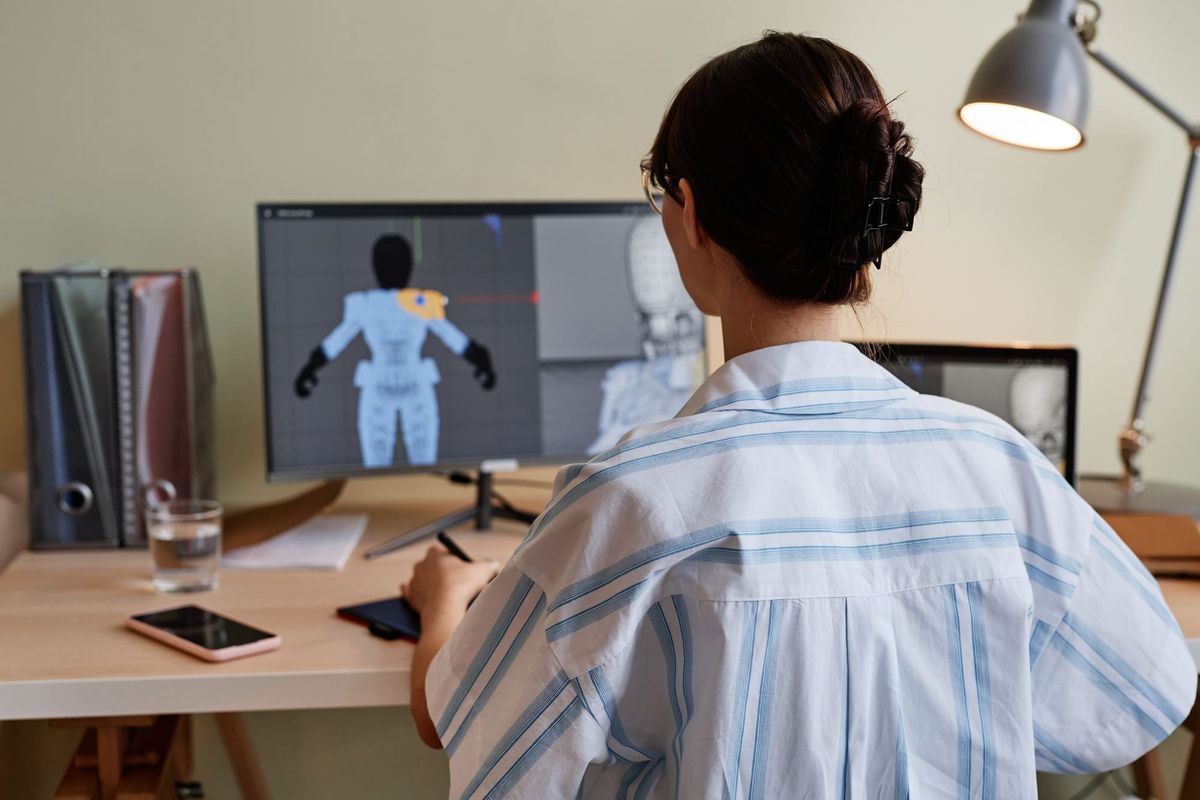
A few years ago, building a business usually meant building a team first.
You needed someone to write. Someone to design. Someone to research. Someone to manage customers. Someone to build the website. Someone to edit the content. Someone to organize the operations.
Today, one person with the right tools can do more than a small team could do a decade ago.
That does not mean everyone will become a founder. It does not mean AI can magically build a company for you. And it definitely does not mean human judgment no longer matters.
But it does mean something important has changed:
The cost of starting, testing and running small ideas is falling fast.
A one-person business is no longer just a freelancer with a laptop. It can be a creator, consultant, analyst, coach, designer, developer, newsletter writer, digital product seller or niche expert using AI as a research assistant, editor, strategist, operations helper and creative partner.
This is one of the biggest shifts happening at the intersection of work, technology and modern life.
And it is only getting started.
Visual block: the old way vs. the new way
Wstaw tutaj prostą grafikę lub tabelkę w Ghost.
| The old business stack | The new AI-assisted stack |
|---|---|
| Hire a writer | Draft with AI, edit with taste |
| Hire a researcher | Use AI to summarize and compare sources |
| Hire a designer | Generate concepts, then refine visually |
| Hire an assistant | Automate repetitive admin work |
| Hire a marketer | Test angles, headlines and content ideas faster |
| Build slowly | Launch smaller experiments quickly |
The rise of the tiny team
The “one-person business” trend is not happening in a vacuum.
Independent work has already become a major part of the labor market. MBO Partners estimated that 72.7 million Americans worked independently in 2024, with 27.7 million working independently full-time. That matters because AI tools are arriving at the same time more people are already exploring freelance work, consulting, side hustles and independent careers.
At the same time, AI adoption is moving from curiosity to normal business behavior. Stanford’s 2025 AI Index reported that 78% of organizations used AI in 2024, up from 55% the previous year.
That combination is powerful.
More people want flexible, independent work. More businesses are comfortable using AI. More tools are becoming affordable, easy to access and built directly into everyday workflows.
The result is a new kind of worker: not just someone who uses AI occasionally, but someone who builds an entire workflow around it.
AI is becoming the new business assistant
For visual readers, think of AI as a stack of helpers around one person.
You are still the decision-maker.
AI simply helps reduce the time between idea and execution.
Idea ↓Research ↓Draft ↓Design ↓Publish ↓Promote ↓ImproveAt every step, AI can speed up the first version.
It can help brainstorm article ideas.
It can summarize long reports.
It can turn messy notes into outlines.
It can draft emails.
It can compare customer feedback.
It can create first versions of landing pages, captions, scripts, images or product descriptions.
But here is the key:
AI is best at making the first draft faster. Humans are still responsible for making the final version good.
That is where taste, judgment and trust come in.
Why this matters for work
The most interesting thing about AI is not that it can write a paragraph or summarize a document.
The interesting thing is that it changes the size of the team needed to start.
A solo consultant can look more polished.
A freelancer can deliver faster.
A creator can test more ideas.
A small business owner can handle more admin work.
A newsletter writer can research, outline, edit and publish more efficiently.
Microsoft’s 2025 Work Trend Index described a growing “capacity gap”: many leaders say productivity needs to increase, while workers report not having enough time or energy to do their jobs. Microsoft also reported that 82% of leaders expect to use digital labor to expand workforce capacity in the next 12 to 18 months.
That phrase digital labor is important.
It suggests AI is not just another app. It is becoming part of how work gets distributed.
For large companies, that may mean AI agents inside teams.
For solo workers and small businesses, it may mean something more personal: the ability to operate with the leverage of a much larger team.
The productivity promise and the catch
There is real evidence that AI can improve certain kinds of work.
A National Bureau of Economic Research study of more than 5,000 customer support agents found that access to a generative AI assistant increased productivity by 14% on average, with larger gains for newer and lower-skilled workers.
This is why AI feels so exciting for independent workers.
If you are running a small business, saving time on writing, research, planning or customer communication is not just convenient. It can be the difference between launching and staying stuck.
But AI has a catch.
It is uneven.
Harvard Business School research with BCG introduced the idea of a “jagged technological frontier”: AI can improve performance on some tasks while making performance worse on others. In that study, people using AI completed more tasks and worked faster on tasks within AI’s strengths, but performed worse on a complex task outside AI’s capability frontier.
That is the warning label every AI-powered worker needs to remember.
AI can make you faster.
It can also make you confidently wrong.
Visual block: where AI helps vs. where humans matter
| AI is useful for | Humans still matter for |
|---|---|
| First drafts | Final judgment |
| Summaries | Accuracy checks |
| Brainstorming | Taste and originality |
| Repetitive tasks | Strategy |
| Comparing options | Ethical decisions |
| Organizing ideas | Trust and relationships |

How to use this trend without getting overwhelmed
The best way to start is not to automate everything.
Start with one workflow.
Choose one repetitive part of your work and build a simple AI-assisted process around it.
For example:
If you write: use AI for outlines, headlines and editing suggestions.
If you sell services: use AI to draft proposals, FAQs and follow-up emails.
If you create content: use AI to turn one idea into multiple formats.
If you run a small business: use AI to summarize customer feedback and organize tasks.
If you are job hunting: use AI to customize cover letters and prepare interview answers.
The goal is not to let AI run your work.
The goal is to remove the blank page.
Once the first version exists, your job is to make it sharper, clearer, more accurate and more human.
The simple AI workbench
For a one-person business, you do not need dozens of tools.
You need a simple workbench.
| Tool type | What it helps with |
|---|---|
| AI writing assistant | Drafts, outlines, emails, summaries |
| Research tool | Source gathering, comparison, trend spotting |
| Design tool | Visual concepts, social graphics, simple branding |
| Automation tool | Repetitive tasks, reminders, workflows |
| Notes/project tool | Ideas, calendars, tasks, documentation |
Start small.
Build habits.
Keep what saves time.
Delete what creates noise.
The best AI system is not the most complex one.
It is the one you actually use.
Want more clear insights on the trends changing money, technology, work and modern life? Join Life Trendsetters and get the weekly briefing delivered to your inbox.