The Hidden Technology Behind Every Tap, Click and Checkout
From payments and calendars to shopping, health and work, everyday apps are quietly becoming the invisible infrastructure of modern life shaping how we spend, decide and move through the day.


Behind that tap, your phone, the merchant’s payment system, a payment processor, a card network and your bank can exchange information in less than a second. The payment terminal didn't talk to your bank. It talked to an app, which talked to Apple or Google, which talked to a payment processor like Stripe, which then talked to Visa, which finally talked to your bank. A half-dozen silent conversations happened in less than a second, all completely invisible to you. You just got your coffee. This silent, interconnected world of services is the most powerful and least understood force in the modern economy. It feels new, like a creation of our specific moment in time.
It isn't. We have seen this exact pattern before, not with bits and bytes, but with steel and sweat. The story doesn't start in Silicon Valley. It starts on a pier in Newark, New Jersey, on an overcast afternoon in April 1956. A stubborn trucking magnate named Malcom McLean was about to quietly render thousands of jobs, hundreds of years of tradition, and the entire logic of global shipping obsolete. He did it with a simple, ugly, corrugated steel box.
McLean watched for years as dockworkers, called longshoremen, moved cargo piece by piece. A bag of coffee, a crate of whiskey, a bundle of timber. It was slow, expensive, and prone to theft. His idea was brutally simple: don't move the cargo, move the whole truck trailer. Then, make that trailer a standard box that could be stacked on a ship, transferred to a train, or put back on a truck chassis without ever being opened. He was building an invisible system, a standardized protocol for physical goods.
The Blueprint for an Invisible Revolution
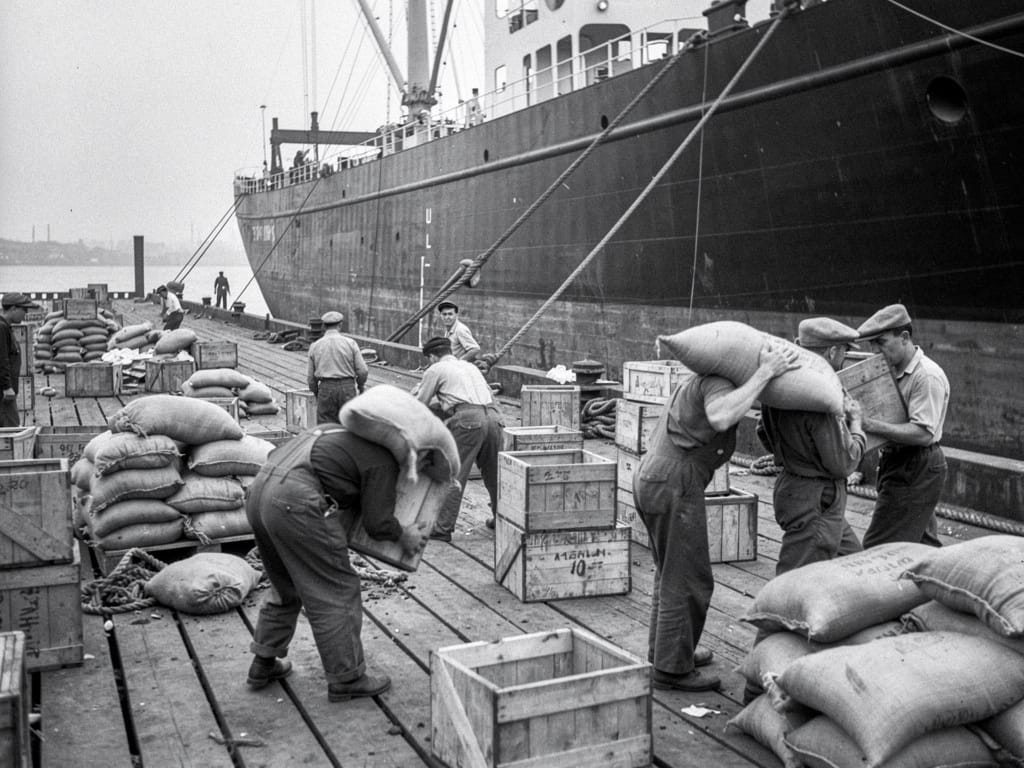
Most observers thought he was crazy. The shipping lines, the port authorities, the unions - they all owned a piece of the chaos and had no incentive to change it. But McLean wasn't just building a box; he was building a system governed by a few non-negotiable rules. These principles were the software that would run his new hardware. They were the key to unlocking a scale of efficiency the world had never seen.
- Enforce a universal standard. The box had to be the same everywhere, for everyone. His first containers were 35 feet long simply because that was the legal limit for trailers in North Carolina at the time. The standard became the language everyone had to speak.
- Decouple the payload from the transport. The contents of the box became irrelevant. The system only cared about the box itself. This abstraction allowed for incredible speed, as a crane could move a box of electronics just as easily as a box of textiles.
- Automate the interface. The point where the box met the ship, the truck, or the train had to be mechanized. He designed his first ship, the SS Ideal-X, with a purpose-built crane structure to lift the containers directly from the dock to the deck. This replaced the work of hundreds of men with one machine operator.
- Integrate the entire chain. To make it work, McLean had to control the trucks, the ports, and the ships. He forced the standard on the system by owning the critical pieces, ensuring there were no gaps where the old, inefficient methods could creep back in.
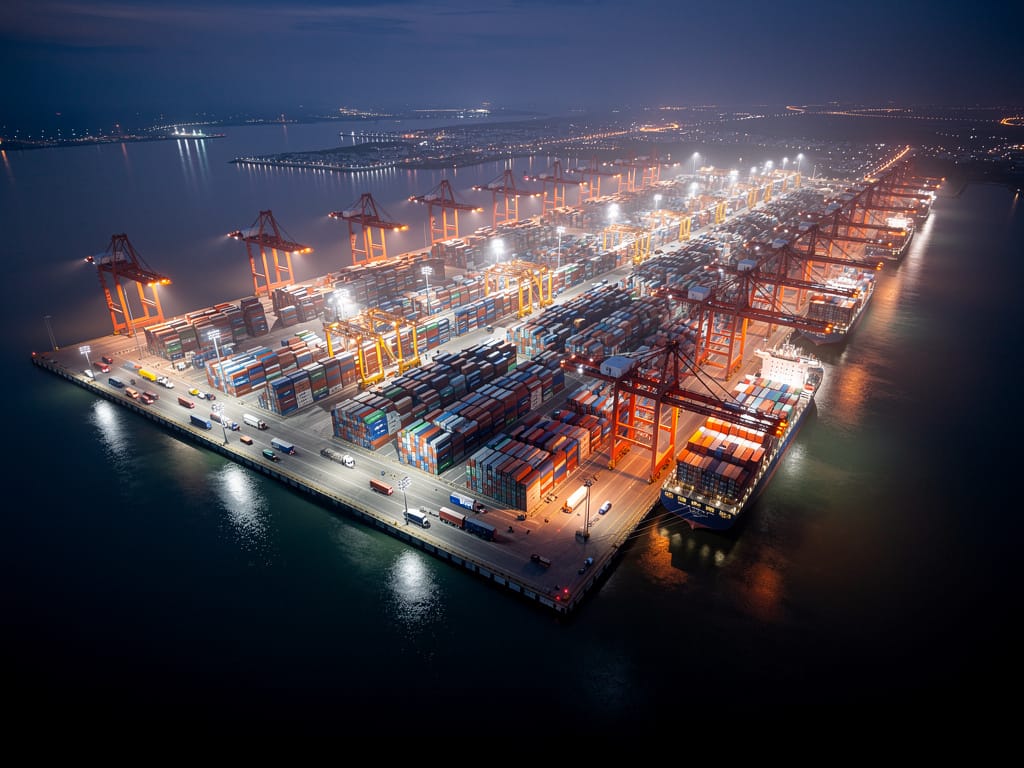
This is the exact same playbook running the digital world. The ugly steel box has been replaced by an equally unglamorous but far more powerful concept: the Application Programming Interface, or API. It's a set of rules that lets different software programs talk to each other, a standardized container for data. The principles are identical.
- Universal Standards: APIs like Stripe for payments or Google Maps for location provide a single, reliable way for any developer to plug a complex service into their app. They speak a common language.
- Decoupling Payload from Transport: An app doesn't need to know how Stripe processes a credit card. It just sends the 'box' of payment data and trusts the system to handle the rest. The payload (the data) is separate from the transport (the API call).
- Automated Interfaces: Code, not people, connects these services. It's the digital equivalent of McLean's crane - a fast, automated, and reliable way to move the boxes where they need to go.
- Integrated Chains: Companies like Amazon with AWS, Google with its suite of services, and Apple with its App Store control the new digital ports. They provide the infrastructure and set the rules for how the data containers move.
What McLean's container did for physical goods, APIs and background services are doing for data. They are the invisible infrastructure of the modern economy, making things faster, cheaper, and more connected. The parallels are striking, but the differences are where the real story lies. McLean's revolution took decades to conquer the globe; the digital version is moving at a speed that is difficult to comprehend. The cost to build a new container port is billions; the cost to call an API is fractions of a cent.
In the 1970s and 80s, the container system led to massive consolidation. Smaller shipping lines were crushed by the giants who could afford the new ships and cranes. We are seeing the same consolidation now. The companies that own the digital ports and control the flow of the new containers are becoming the most powerful entities on earth. The core question remains the same as it was on that dock in 1956: who owns the cranes, and what are the rules for using them?
Want clearer insights on the technologies quietly changing everyday life? Join Life Trendsetters and get the weekly briefing on money, work, technology and modern life.
New to Life Trendsetters? You can also explore our previous posts on money, work and modern life to see how everyday trends are changing the way we spend, work and live.
 James Morton